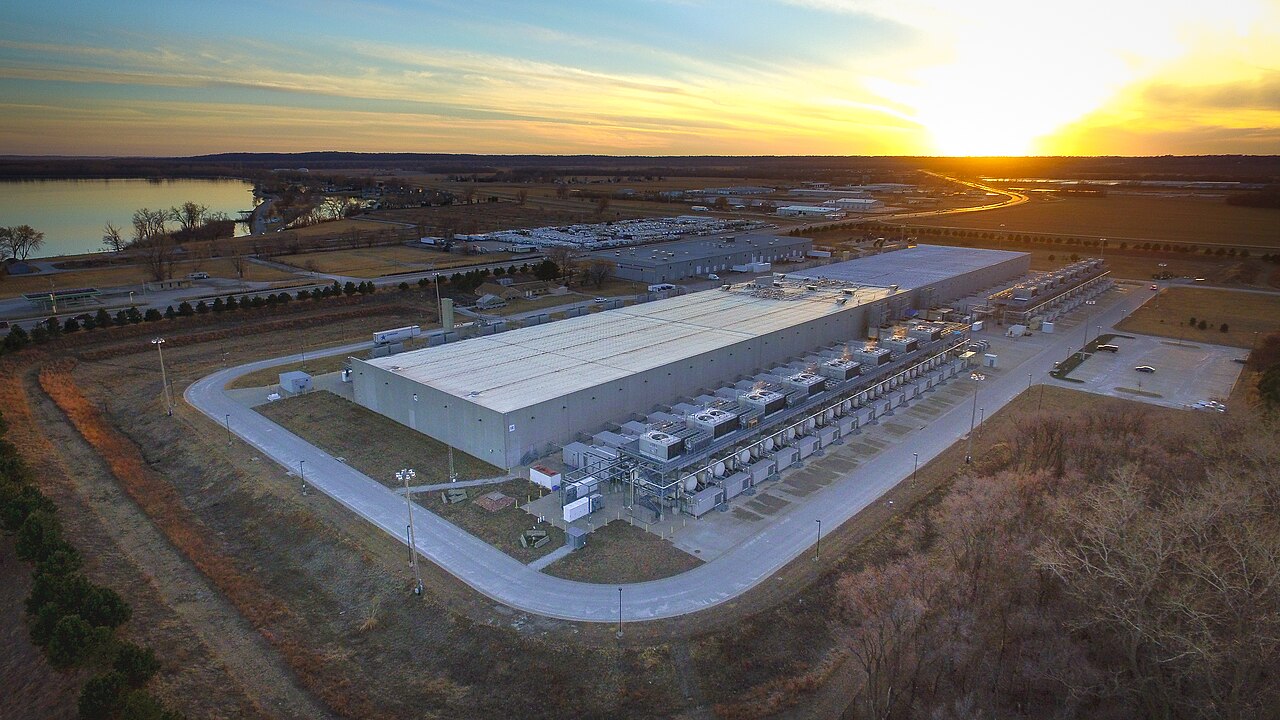

For most of its history, Google's money problem was what to do with all of it. In 2025 its parent, Alphabet, spent $45.7 billion buying back its own shares, its annual report shows. In the three months to September it bought back none. It sold new shares instead, and borrowed, to keep paying for the data centers and chips behind its AI push.
The quarter Alphabet reported on Wednesday shows why it needs the money and what it is getting for it. Revenue rose 25% to $127.6 billion. Google Cloud, which rents computing power and AI tools to other companies, more than doubled, up 103% to $30.7 billion. But the company spent $51.4 billion on capital projects in the quarter, more than its business brought in, and finance chief Anat Ashkenazi told analysts it had "negative free cash flow of $9.1 billion." Alphabet's shares "slumped more than 10%" after the results, CNBC reported; Fortune put the after-hours drop at "more than 11%," wiping out "more than $280 billion in market value."
The business is growing faster
Most of the numbers that describe Alphabet's business went up. Google Services, which holds Search, YouTube and Android, grew 11% to $96.3 billion, with Search and other revenue up 12%. Operating income rose 30%, and the operating margin, the share of revenue left as operating profit, was 31.8%. Chief executive Sundar Pichai said the company is "now on a half-trillion dollar revenue run rate."
Cloud is the reason it spends. Pichai said its revenue grew "powered by huge demand for our AI infrastructure and AI solutions," and customers have signed up for much more: Ashkenazi said Google Cloud's backlog, revenue under contract but not yet earned, was $561 billion, and that the company expects to recognize "just over 55% of the total backlog as revenues over the next 24 months."
Profit fell anyway, for a reason outside the business. Net income fell to $26.17 billion, or $2.12 a share, from $34.98 billion a year earlier, CNBC reported. Alphabet owns shares in SpaceX, and when SpaceX's stock price falls, Alphabet records the loss on paper. Ashkenazi said other income and expenses were "negative $8.2 billion due primarily to unrealized loss from our investment in SpaceX."
The bill
The $51.4 billion of capital spending in one quarter compares with $91.4 billion in all of 2025 and $32.3 billion in 2023, according to Alphabet's annual reports. About 65% went on servers and networking equipment, which Alphabet expects to last about six years, Ashkenazi said, and the rest on the buildings that house them. Alphabet kept its forecast of $195 billion to $205 billion of capital spending for 2026, CNBC reported, and Ashkenazi told analysts: "We continue to expect our CapEx to increase significantly in 2027."
The commitments go further still. At the end of September, she said, Alphabet had "future purchase commitments of $924 billion and pre-commencement leases and other obligations of $152 billion," figures she described as maximum contractual amounts.
Source: SEC EDGAR XBRL data
Paying for it
Capital spending is only part of the cash going out. Alphabet is also building stocks of its own AI chips, called TPUs, to sell to customers, and it paid a $5.2 billion European Commission fine from 2018 once the appeal process ended. Ashkenazi said the investments and the chip inventory "will put pressure on free cash flows." The release's own table shows free cash flow below zero for the second quarter in a row.
So Alphabet has turned to investors. Under what it calls an at-the-market program, which lets a company sell new shares into the market a little at a time, it sold 12 million Class A shares for $4.3 billion and 24 million Class C shares for $8.1 billion in the quarter, and it can sell another $27.6 billion. It also sold bonds for $28.7 billion. Long-term debt rose to $125.1 billion, from $21.6 billion a year earlier, CNBC reported.
Alphabet is not short of money. It ended September with $265.1 billion in cash and marketable securities, though $90.4 billion of that was shares it holds in other companies, Ashkenazi said. But the cash its business produces no longer covers what it is building.
Source: SEC EDGAR XBRL data
Three ways to pay for AI
This is analysis, not advice. This week's results show three ways of paying for AI. ServiceNow cut its own capital spending, leans more on computing power rented from other companies and borrowed to buy security companies. Microsoft, which spent $115.9 billion in its fiscal year to June, builds its own data centers and pays for them from the cash its business produces and from its savings, which are running down. Alphabet builds faster still, and is now asking shareholders and lenders to help pay.
Alphabet's case is that the spending will pay off. "Throughout this investment cycle, we expect to generate an attractive ROIC that remains meaningfully above our cost of capital," Ashkenazi said, using the initials for return on invested capital. The backlog suggests the demand is real. The open question is timing: whether the cash from that backlog, and from the chips Alphabet is stockpiling for customers, comes in before the bill for the next round of building, which it has already said will be bigger.
Two things would show the bet working: free cash flow turning positive again as the chip inventory is delivered and paid for, and Cloud revenue rising in step with the backlog. If instead the share sales and bond issues continue through 2027, Alphabet will have become a different kind of company, one that needs outside money to grow. Either way, the company that once had more cash than it could use is now spending all the cash it makes, and more.