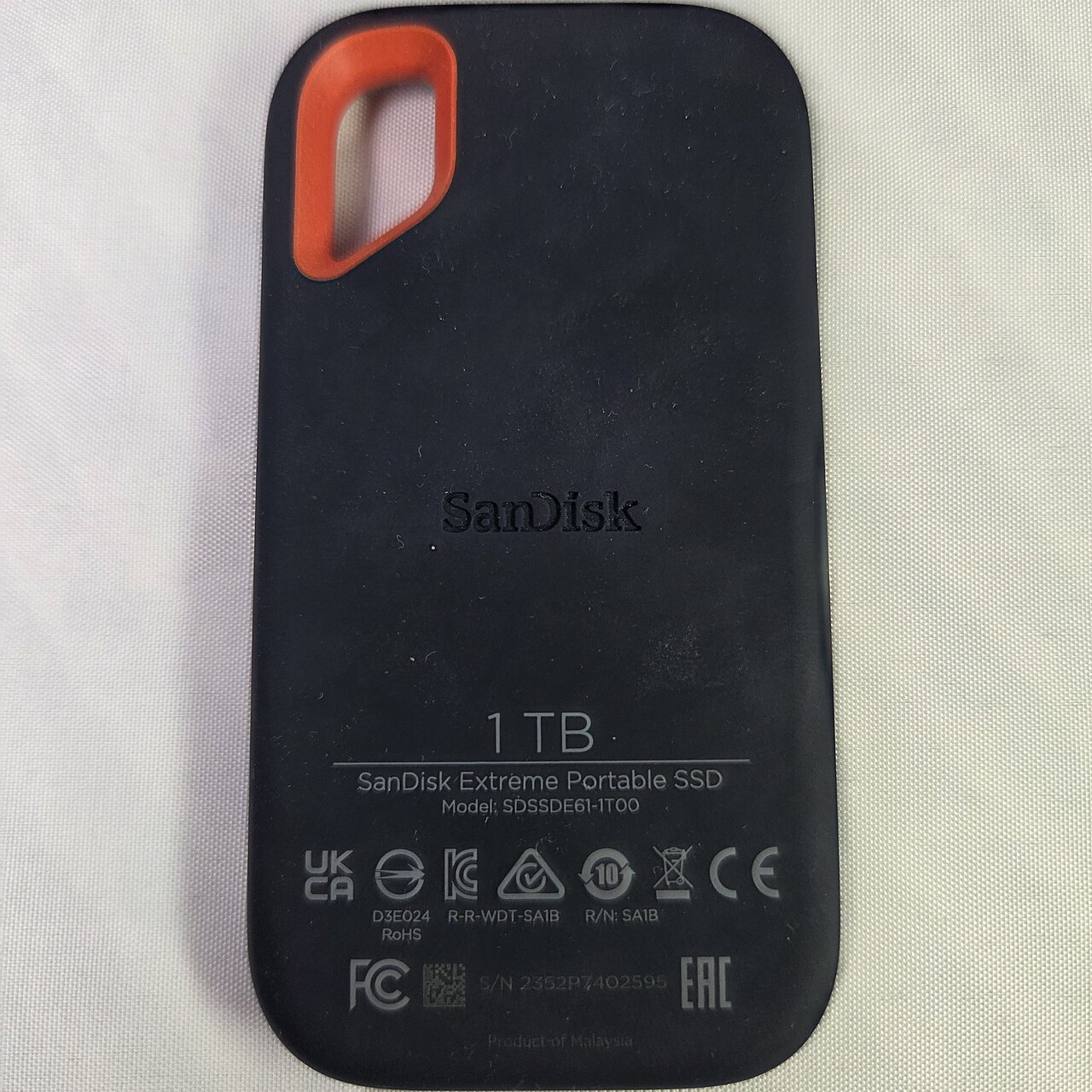

Sandisk had just reported the best quarter in its history. Sales were up 378% on a year earlier, to $11 billion, and profit beat what Wall Street expected. It announced an eight-for-one stock split and said it had spent $5.0 billion buying back its own shares. On Friday, the first trading day after the results, its shares fell 13.5% anyway, while the S&P 500 fund fell 1.8%.
The shares were trading sharply lower on Friday morning, The Motley Fool reported. 24/7 Wall St. said the results "couldn’t protect one of this year’s biggest memory winners from a sharp selloff," and that other makers of memory and storage, Western Digital, Seagate and Micron, fell with it.
Why did a quarter like that meet a falling share price? The news organizations that covered it give three reasons: a share price that had already risen a long way this year, doubts about how long memory prices can stay this high, and a consumer business that is shrinking. The filings show what the company actually reported, and what it says comes next.
A record quarter
Sandisk makes flash memory, the chips that keep data when the power is off, and the drives and cards built from them. Its fiscal year ends in June, so the three months to October 2 were the first quarter of its fiscal 2027. Revenue was $11.0 billion, up 23% from the quarter before, the earnings release says. A year earlier, sales were $2.31 billion, Invezz reported. Net income was $8.1 billion, or $52.60 a share.
That is more profit in one quarter than Sandisk made in its whole last fiscal year, the 12 months to early July, when net income was $11.4 billion on sales of $20.2 billion, its annual report shows. A year before that, it lost money. In the annual report, Sandisk said its sales rose 175% that year, with data center sales up 437%.
The data center business, which sells drives to cloud companies and for artificial intelligence work, led again. Its sales were $4.8 billion, up 1,682% on a year earlier, The Motley Fool reported, above the $4 billion analysts had expected. Edge, the chips Sandisk sells to makers of phones, PCs and cars, brought in $5.83 billion, up 7% on the quarter before, 24/7 Wall St. reported. Chief financial officer Luis Visoso told analysts that 60% of the rise from the previous quarter came from selling more and 40% from higher prices, according to The Motley Fool's transcript of the call.
Chief executive David Goeckeler said in the release that the quarter showed "robust and growing demand for our products driving outpaced growth in our data center business."
What Wall Street expected
Analysts had expected adjusted earnings, which leave out some costs such as stock pay, of $47.15 a share, 24/7 Wall St. reported; The Motley Fool put the consensus at $46.67. Sandisk's adjusted figure was $49.51. Sales of about $10.7 billion were expected, both reported.
The company's outlook also came in above forecasts. Sandisk said in its release that it expects second-quarter revenue "in the range of $12.2 billion to $12.6 billion" with adjusted earnings of $55.00 to $57.00 a share. Investing.com said analysts had expected $12.29 billion of sales, and 24/7 Wall St. said they had forecast adjusted earnings of $54.69 a share.
The split will give each shareholder seven more shares for each one held, with trading on the new basis expected from November 20. The release says it is meant "to make the stock more accessible, including to employees," and that the company's "overall market capitalization and stockholder ownership percentages will not be affected by the stock split." A split changes the number of shares, not what the company is worth.
Source: SEC EDGAR XBRL data
What the market focused on
"While they were better than expected, investors wanted more," The Motley Fool wrote of the results. It said "concerns about the continuing demand for all things AI, the resilience of consumer spending, and a ceiling on memory prices are all weighing on the stock." Invezz, writing after the first fall in late trading on Thursday, pointed to "weakness in consumer products and doubts about how long elevated memory prices can last."
The consumer business, Sandisk's own-brand cards and drives sold in shops, is the weak spot. Its sales fell 29% from the quarter before to $397 million. Visoso put it down to price: consumer revenue fell "as the market adjusts to higher pricing," he told analysts.
Some of the selling was not about Sandisk alone. 24/7 Wall St. said the shares had already fallen in Thursday's regular session, before the report, and described "profit taking across memory stocks worldwide, with Sandisk caught in the same current," with memory makers also down in Seoul.
The company's own comments on the call gave the cautious side something to point to as well. Asked about the March quarter, its fiscal third, Visoso said "our Q3 is normally our weakest sequential quarter," and that for analysts' models "I would be conservative in your sequential growth from Q2 to Q3." 24/7 Wall St. noted that skeptics point to "a seasonally weak Q3 FY2027 and that consumer sales are softening under higher prices."
Source: SEC EDGAR XBRL data
The company's case
Sandisk says demand will stay strong. On the call, Visoso said the company expects data center to "represent over 55% of the market with bit demand growing about 40% year-on-year" in calendar 2027. Much of its output is already sold under long-term deals with customers: 50% of this fiscal year's bits and two-thirds of next year's, according to The Motley Fool's summary of the call. "Our NBM pipeline exceeds our supply throughout the end of the decade," Visoso said, referring to those deals.
Its annual report sets out the other side. It lists "declining average selling prices, volatile demand, technological change, industry consolidation, lengthy product qualifications, and supply constraints" among the conditions that can hurt the business.
What it means
This is our analysis, not advice. Sandisk's numbers are what a shortage looks like from the seller's side: almost every dollar of extra sales came with higher prices or more data center orders, and the company kept most of it as profit. That is also why the market reads each quarter so closely. A business whose profits depend this much on the price of memory can see them shrink as fast as they grew, and the company's own filings say so.
Two things in the next reports would test the company's case: whether the long-term deals hold the data center business up through the fiscal third quarter, which Sandisk itself calls its weakest, and whether consumer sales stop falling as shoppers get used to higher prices. Friday showed how much was already expected of a company that had just reported its best quarter.