
For most of this year, Broadcom has been the AI boom's other chip company: not the one that sells the famous graphics processors, but the one that designs custom AI chips for the giants, starting with Google. On Friday, one analyst's survey showed how much of that rests on a few customers' plans.
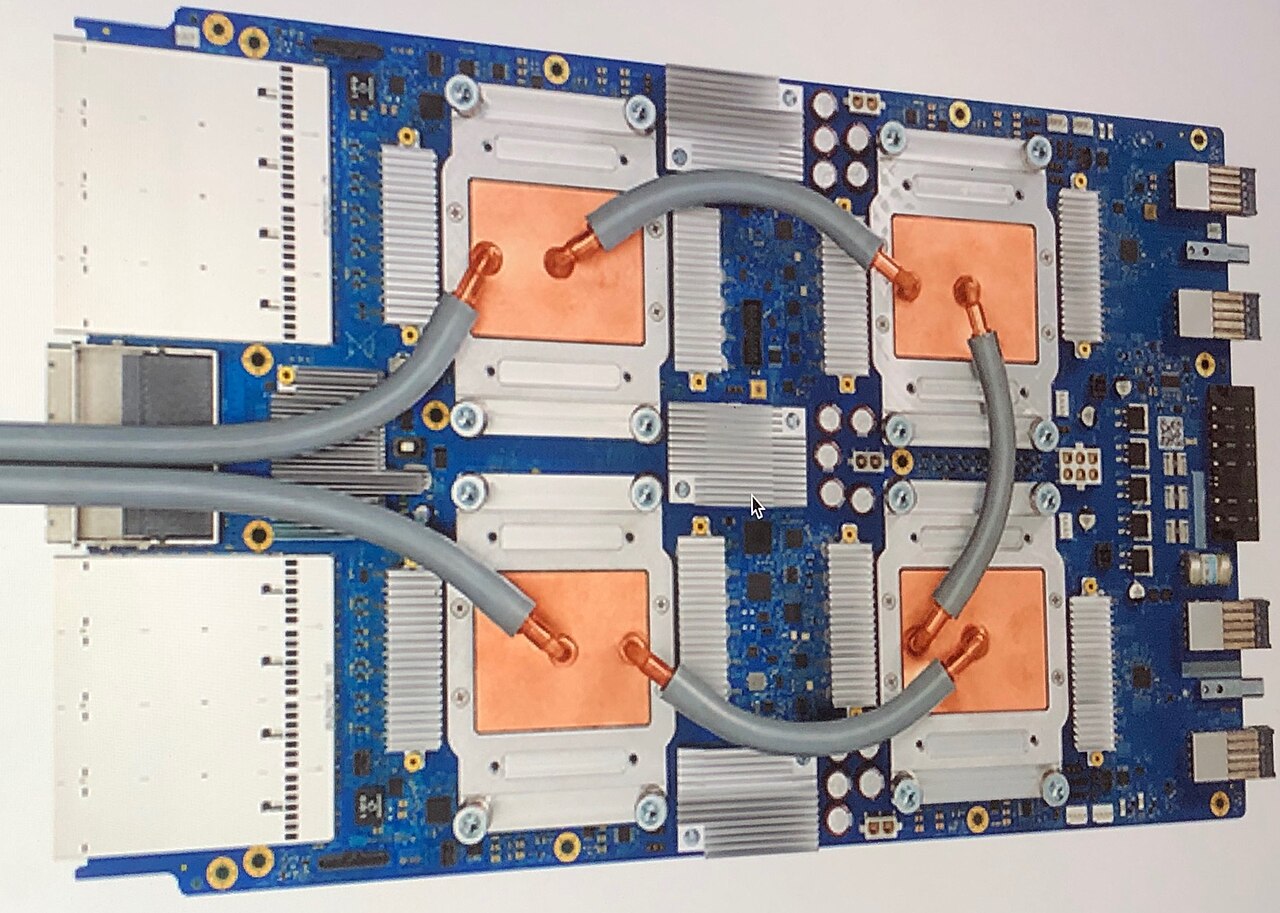
Ming-Chi Kuo, a supply-chain analyst at TF International Securities, wrote on X that his latest industry survey showed Google had cut its planned 2027 shipments of the TPU 8i, a chip Broadcom designs for it, by about 1 million units, or roughly 20%, according to 24/7 Wall St. and Seeking Alpha. "Most of the cut hits the pricier 8i Max model, code-named Whalefish," Stock Analysis reported. Google plans to ship more of the TPU 8t, a chip designed with MediaTek of Taiwan, "although the details have not been finalized, Kuo said," according to Seeking Alpha.
Broadcom's shares fell hard. 24/7 Wall St. reported them down 12% on Friday afternoon; Stock Analysis put the fall at 11.4%. The drop came on a day when the whole chip industry was selling off, so not all of it was Kuo's doing. This story is about what the report touched: how much of Broadcom's business now rests on a handful of customers, and what Broadcom's own filings say about that risk.
What Kuo said, and what nobody has confirmed
Kuo explained the change as Google putting its own AI research first while chips and power are scarce. "Google has repeatedly stressed in recent months that frontier model development gets first call on compute, and this shift in the 8t and 8i shipment mix is precisely the adjustment it's making amid a tight supply chain and data center power constraints," he wrote, as quoted by Stock Analysis.
Two cautions apply. First, the figures come from one analyst's survey of suppliers, not from either company: "Kuo's figures come from a supply-chain survey that neither Google nor Broadcom has confirmed, and Broadcom gives its own numbers on Dec. 9," 24/7 Wall St. noted. Second, the market was falling anyway. The PHLX Semiconductor Index was down 8.0% in the afternoon, Stock Analysis reported, and "Nvidia dropped 14% on Friday, its worst day in almost two years," CNN reported.
One detail cuts the other way. MediaTek, the supposed winner, also fell 10% in Taipei, but "Trading there had ended hours before Kuo's post," Stock Analysis noted, so that fall wasn't a verdict on the report.
What Broadcom said in September
Ten weeks earlier, Broadcom's chief executive, Hock Tan, sounded certain about Google. On the September 2 earnings call, Tan said Broadcom had begun production shipments of the TPU 8i and expected to ramp them up to high volumes. "Our engagement with Google has never been stronger," he said, according to Stock Analysis. He also said Anthropic, the Claude maker, "is on track to become our largest XPU customer in 2027," 24/7 Wall St. reported. XPU is Broadcom's word for a custom AI chip.
The numbers behind that confidence are large. In the quarter that ended August 2, "Q3 AI semiconductor revenue of $16.7 billion grew 221% year-over-year," Tan said in the results release. Broadcom forecast revenue of about $34.8 billion for the quarter that ended in early November, up 93 percent from a year earlier. Tan also said Broadcom had "secured the supply to again double AI revenue to approximately $115 billion" in its 2027 fiscal year, 24/7 Wall St. reported.
Source: SEC EDGAR XBRL data
For a sense of scale, Broadcom's revenue for the whole of fiscal 2025 was $63.9 billion, up from $51.6 billion the year before.
Five customers, more than half of sales
Broadcom's latest quarterly report, filed in September, puts the dependence in one sentence. Broadcom believes its top five end customers accounted for "approximately 55%" of its revenue in the quarter, up from "approximately 40%" a year earlier. The filing doesn't name them.
The company is plain about what that means. "We expect to continue to experience significant customer concentration in future periods. The loss of, or significant decrease in demand from, any of our top five end customers could have a material adverse effect on our business," the report says. It adds that "some of our key semiconductor customers place large orders or delay orders, causing our quarterly net revenue to fluctuate significantly."
Broadcom now shares its customers' risks
The same report shows something newer. Broadcom isn't only selling chips; it is helping its customers pay for them. "We see unprecedented demand for our custom AI accelerators or XPUs and AI networking solutions from our customers, including the leading frontier AI labs, due to the demand for AI compute. However, deploying AI infrastructure to meet this demand requires our customers to access significant capital," the filing says.
So Broadcom built what it calls the AI XPV platform. In June it launched the platform "with an initial tranche of $35 billion led by a financial partner" to deploy computing capacity "for our customer," whom it doesn't name. A financial partner buys racks of Broadcom-designed chips and leases them to the customer, and Broadcom guarantees part of the leases. Its "maximum potential liability under the Backstop upon the deployment of all AI racks, on an undiscounted basis, was approximately $29 billion," the 10-Q says.
In October, Broadcom set up a second arrangement of the same kind. Its maximum potential liability under that one "is approximately $43 billion," it said in a filing on October 27, adding: "The Backstop is a contingent liability the Company believes has a low probability of occurring, supported by the expectation of a strong profitability trajectory of the customer and the sustaining value of the underlying assets."
Source: SEC EDGAR XBRL data
Our read
This is analysis, not advice. A chip designer with five customers making up more than half its sales will always swing on news about one of them, and Friday was a reminder. The concentration isn't a secret; Broadcom states it in every filing. What has changed this year is the size of the bets around it. Broadcom has tied its forecast of AI revenue to a few AI labs and cloud giants, and with the backstops it has also tied part of its balance sheet to whether those customers can pay their leases.
That doesn't make Kuo right. His survey is unconfirmed, the details are not final, as Stock Analysis reported him saying, and a shift from one Google chip to another doesn't mean Google is buying fewer chips overall. If Broadcom repeats its September forecast on December 9 and says nothing has changed at Google, the survey will look like noise in a falling market. If it trims the forecast, or starts naming customers to explain a gap, Friday will look like the first sign.
Either way, the most useful sentence about Broadcom this week came from Broadcom itself, in September: any of its top five customers could hurt it badly. On Friday, a report about just one of them was enough to show it.