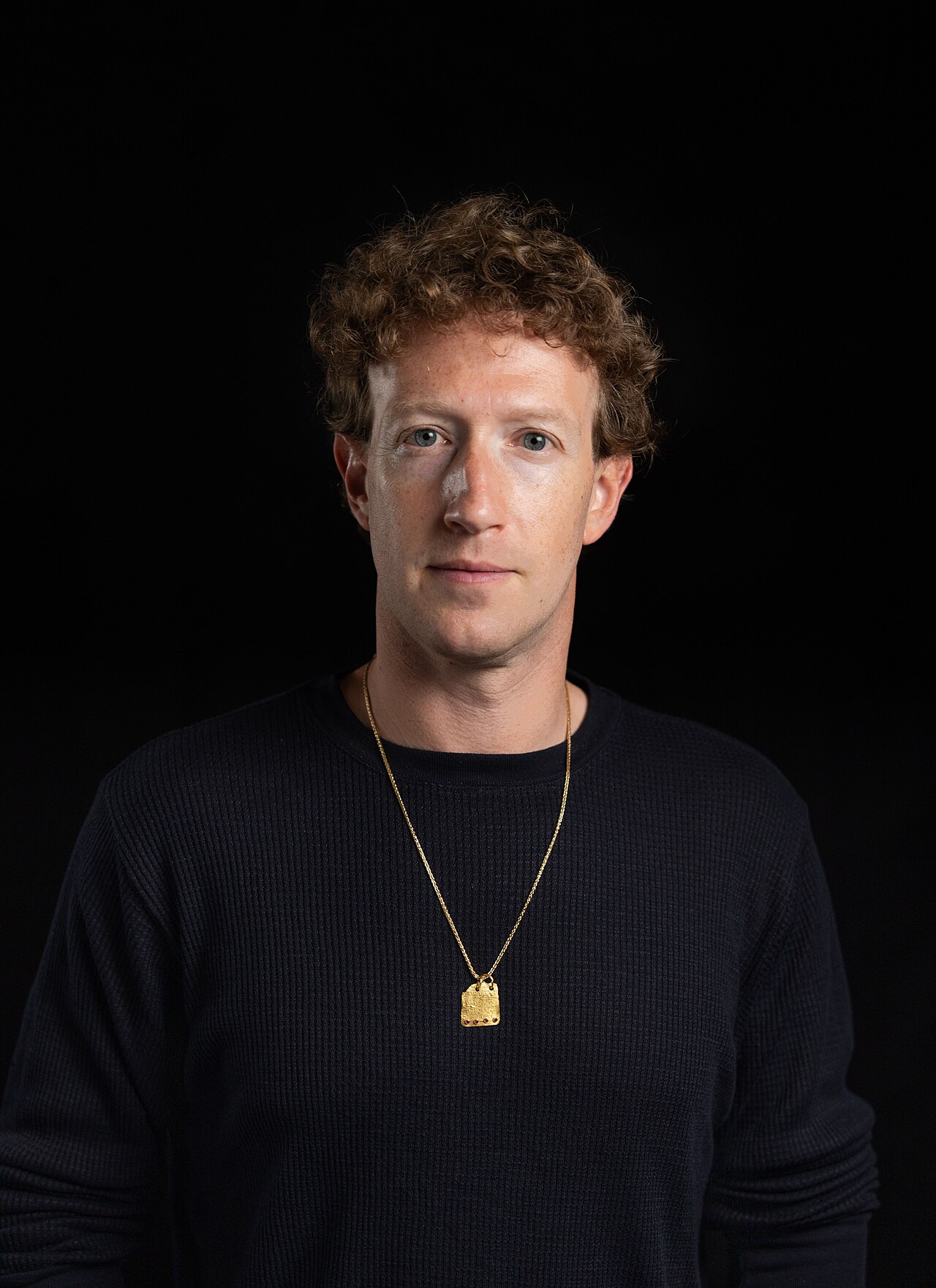

In August, Mark Zuckerberg asked Meta's board for something unusual: twenty new shares for every share Meta's investors already owned. The new shares would carry no votes, so he could sell them and still control the company. The independent directors negotiating with him called the request excessive. Three months later, after a much smaller version was agreed, the whole plan is on hold until a trial.
"In a court filing Wednesday, Meta agreed to hold off issuing any Class C shares during the legal fight, which is set for trial in Delaware Chancery Court in April," Bloomberg reported. The proposed trial runs from April 19 to 23, 2027, and "The schedule still needs the approval of Chancellor Kathaleen St. J. McCormick," Stock Analysis reported. Meta said: "In the best interest of our shareholders, we are seeking a final determination as quickly as the court will allow, and we will vigorously defend against these claims."
The fight is about who controls Meta and who pays for its AI spending. Meta's filings, including a long account of the negotiations with Zuckerberg, show what the company wanted the new shares for and what he wanted from them.
What Meta announced in October
On October 21, along with its third-quarter results, Meta said its board had approved a new class of non-voting Class C stock and declared a dividend of one Class C share for each existing share. Zuckerberg, who holds the majority of the votes, approved it by written consent, so no other shareholders voted. The new charter takes effect on January 19, 2027. Meta's shares fell 7.0% the next day, while the S&P 500 fund fell 1.2%.
The dividend works like a two-for-one stock split, except that half of each holding would carry no vote. For most shareholders that changes little. For Zuckerberg it changes a lot. He held "approximately 60.6%" of Meta's voting power but "approximately 13.4%" of its economic interest, according to Meta's information statement. Non-voting shares let him turn part of that economic stake into cash without giving up control.
The board put limits on that. Under a "Founder Alignment Agreement," "20% of the shares of Class C common stock to be issued to the Holder Group in the Stock Dividend will be freely saleable and the other 80% of the shares of Class C common stock will be subject to sale and transfer restrictions," Meta's filing says. The free part is "10% of his overall economic stake," the information statement says, and he may sell it "for any reason, including so that he may pay his potential tax liability under California Proposition 40, if enacted into law." In return, Zuckerberg committed, for eight years, "to remain a resident of California," or wherever Meta has its headquarters.
From twenty-for-one to one-for-one
The information statement tells how the deal was reached. Zuckerberg's lawyers first asked for a twenty-for-one dividend; the special committee of independent directors discussed "his request for a 20:1 dividend ratio for the issuance of Class C common stock, which the Special Committee viewed as excessive." Then he proposed four-for-one. The final term sheet "reduced the proposed dividend to one share of Class C common stock for each share of Class A common stock and Class B common stock, from the twenty-for-one ratio Mr. Zuckerberg proposed on August 4 and the four-for-one ratio he proposed on September 5, and lengthened the release period from four years to eight." The committee called the talks "protracted and, at several points, contentious."
The tax that helped start it never arrived. Proposition 40, California's proposed wealth tax on billionaires, "was recently rejected by 53% of voters in a referendum," Bloomberg reported.
The money Meta wants to raise
Meta's case for the shares is about money for AI. "We anticipate making capital expenditures of approximately $135 billion to $145 billion in 2026 to support our AI efforts and core business," its 10-Q says. In the third quarter alone, capital expenditures "were $34.91 billion." For comparison, Meta's operating cash flow for all of 2025 was $115.8 billion, and it spent $69.7 billion on capital projects that year.
Source: SEC EDGAR XBRL data
The special committee wrote that "the Company presently has sufficient capital resources for its current needs," but that it would be prudent to raise money "before even more companies have absorbed available capital in the market." It named the competition for investors' money: "Recent significant capital raises at other notable companies, and others soon anticipated to take place, to fund the same AI growth—for example, Alphabet, SpaceX, Anthropic, and OpenAI—have resulted in an increasingly challenging environment for raising capital."
Meta has already started raising. In late October it agreed to sell 250,000,000 depositary shares of a mandatory convertible preferred stock, a security that turns into common shares later, and set up forward sales of 40,000,000 Class A shares. Under those agreements, Meta may settle "by delivering only shares of Class C Common Stock" once that class exists. In November it sold six series of euro bonds. If a final ruling voids the new charter, "Meta has agreed to rescind it, along with the mandatory convertible preferred stock it sold in October," Stock Analysis reported.
Source: SEC EDGAR XBRL data
The other side
Ten shareholder lawsuits, now merged into one case, accuse Zuckerberg and the other directors of breaching their duties to shareholders. "Public stockholders receive a pro rata stock dividend, but no corresponding governance protection or vote on the transaction," attorneys for the plaintiffs wrote in one suit, according to Bloomberg. One complaint said: "The process described above was unfair at every stage: Zuckerberg dominated and shaped it, coerced the Special Committee with threats and deadlines, and obtained approval from a Committee that never valued what it gave away and from no stockholder other than himself," Benzinga reported. Meta says the plan was approved on the unanimous recommendation of independent directors.
This has happened before. "The Facebook parent withdrew a similar dual-class share proposal in 2017 ahead of a Delaware shareholder trial," Benzinga noted.
What it means
This is analysis, not advice. The pause doesn't stop Meta's AI spending; the filings say the company has the money it needs for now, and it has kept raising money through bonds and preferred stock. What it delays is the cheapest way to raise a lot more later without touching Zuckerberg's control. Meta itself warns that non-voting shares "may trade at a discount," in which case it "may need to issue more shares" to raise the same money, "which could be dilutive to all stockholders."
The trial will turn on process, not on whether Meta needs money: whether a committee negotiating with a founder who controls the vote protected everyone else. The information statement is Meta's best evidence, showing a committee that said no to twenty-for-one. It is also the plaintiffs' best evidence, because it shows how hard Zuckerberg pushed and that he alone approved the result.
There is a deadline inside the deal, too. Zuckerberg may end the agreement if the dividend "is not paid by the fifth business day following the effectiveness of the Restated Charter (subject to applicable Delaware law and any agreed extension)." With the charter due in January and the trial in April, that clause will need an answer before the court gives one. In 2017 Meta dropped its plan before trial. This time it says it wants a ruling, and soon.