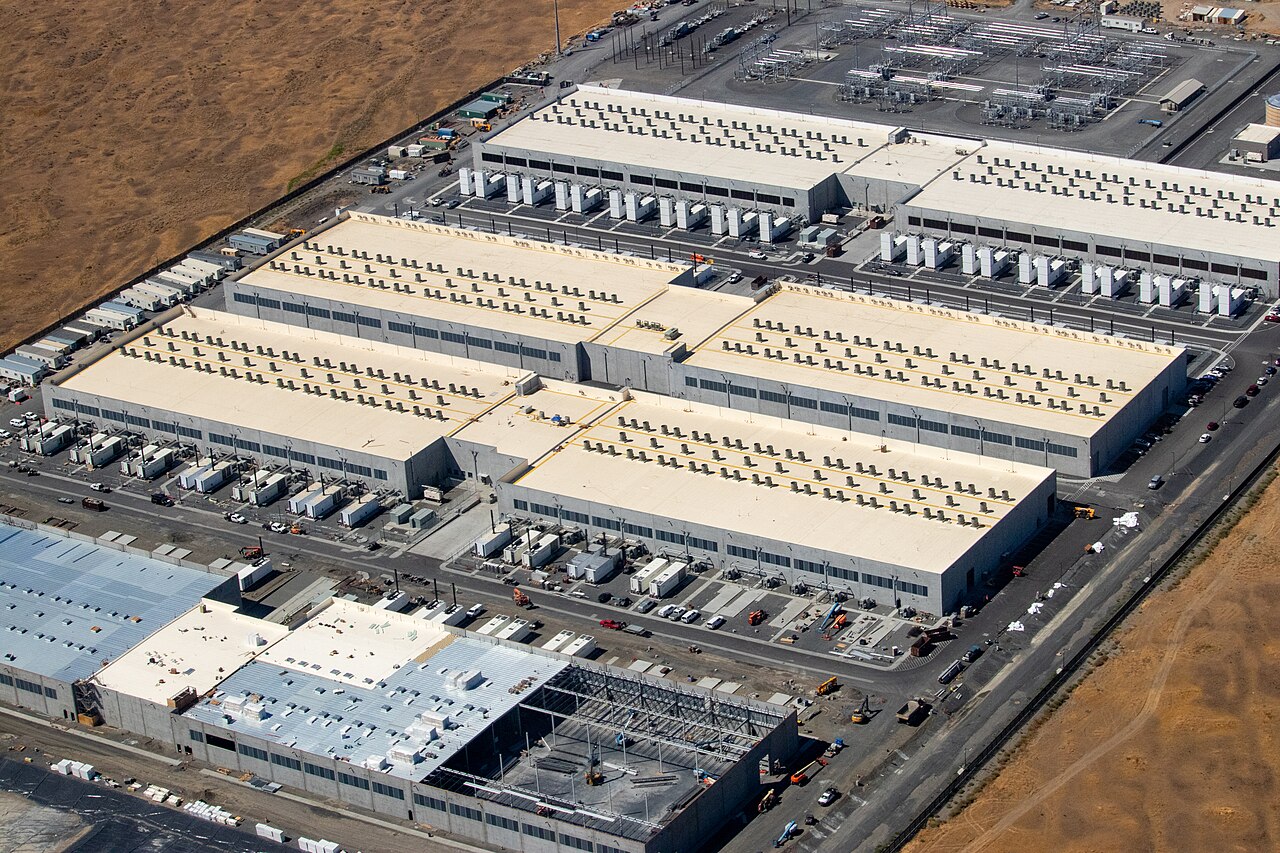

In the three months to September, Amazon spent $77.3 billion on buildings and equipment, CNBC reported, more than twice the $35.1 billion of a year earlier. Most of it went on data centers and the chips and power gear inside them. In all of 2025 the company spent $131.8 billion on capital projects, its annual report shows, and in 2023 it spent $52.7 billion.
The quarter Amazon reported on Thursday shows both sides of that bet. Its cloud business, Amazon Web Services, grew at what Amazon called "its fastest growth in nearly five years," and the company kept more of each dollar of sales as profit than ever before. But the cash its businesses bring in no longer covers what it is building. Over the past 12 months, Amazon's free cash flow, the cash left after paying for new buildings and equipment, was an outflow of $42.4 billion. A year earlier it was an inflow of $14.8 billion.
Investors noticed. Amazon's shares "plunged more than 6% in extended trading Thursday," CNBC reported; Yahoo Finance's StockStory put the drop at 6.5% right after the report. The company is now paying for its AI build-out partly with borrowed money, as Alphabet said it was doing a day earlier.
The business is doing well
Sales rose 12% to $201.9 billion. Growth was held back by the calendar: "Prime Day timing shifted this year, with the event occurring in Q2 for most large countries," the earnings release says, so last year's sale sits in the comparison and this year's mostly doesn't.
Operating income, the profit from running the business before interest and taxes, rose to $28.1 billion from $17.4 billion. The operating margin was 13.9%, which the release calls "Amazon’s highest operating margin ever."
AWS did most of the work. Its sales grew 39% to $46.0 billion, and its operating income was $17.8 billion, against $11.4 billion a year earlier. That is well over half of Amazon's operating income, from a business that brings in less than a quarter of its sales.
The store and the ads business were softer. Online store sales grew 2% to $68.47 billion, CNBC reported, and advertising revenue rose 11% to $19.64 billion, short of what analysts expected. Both were hit by the Prime Day move, and Amazon said it expects advertising revenue "to grow in the high teens" in the fourth quarter.
Net income fell to $20.7 billion, or $1.89 a share, from $21.2 billion. That drop wasn't the business: a year earlier, Amazon booked $9.5 billion of pre-tax gains on its investment in Anthropic, the AI company that makes Claude.
The bill
The spending is for capacity to run AI, and Amazon says customers are taking it as fast as it arrives. "Almost as fast as we install capacity, customers are gobbling it up," chief executive Andy Jassy said on the call with analysts, MarketBeat reported. In the release he said the AWS spending "is working," pointing to "projected revenue growth rates of over 40% both in 2027 and in 2028."
Amazon kept its forecast for this year's spending: "We continue to expect 2026 cash capital expenditures to be approximately $220 billion." And next year will be bigger. Jassy said the company expects to "spend meaningfully more in 2027," CNBC reported; in MarketBeat's account of the call, spending "is expected to rise meaningfully in 2027."
Reports differ slightly on the quarter itself. CNBC's $77.3 billion is what Amazon paid for property and equipment; MarketBeat put cash capital spending at $75.9 billion, the figure after what Amazon gets back from selling equipment and from incentives, which is how Amazon measures it for free cash flow.
Some of the money goes on Amazon's own chips. Jassy said the chips business "continues to grow triple-digit percentages year over year," CNBC reported, and Amazon plans to sell its Trainium AI chips outside its own cloud from "late in 2027," which MarketBeat also reported.
Source: SEC EDGAR XBRL data
Where the money comes from
Amazon's operating cash flow, the cash its businesses bring in, rose 29% to $168.3 billion over the past 12 months. It isn't enough. Over the same period, its spending on property and equipment rose by $94.8 billion, an increase the release says "primarily reflects investments in artificial intelligence." Free cash flow has now been negative for two quarters running, CNBC noted: an outflow of $7.6 billion in the 12 months to June, and $42.4 billion in the 12 months to September.
So Amazon borrows. At the end of June it had $132.1 billion of bonds outstanding, its last quarterly report shows. After that it sold another $25.0 billion of dollar bonds, due between 2029 and 2066, and in September it sold four more issues in British pounds, a filing shows. In June it also arranged a $17.5 billion loan from a group of banks that it could draw on until the end of September. Its report on the third quarter, the 10-Q, due in the coming days, will show how much of that it used.
Source: SEC EDGAR XBRL data
What it adds up to
This is analysis, not advice. Amazon's quarter looks a lot like Alphabet's: a cloud business growing fast, spending growing faster, and the gap filled with debt. Microsoft, the third big cloud provider, is still paying for its data centers from the cash its business produces.
Amazon's case is that the demand is already there. Jassy has said customers take capacity as soon as it is installed, and he set out the size of the prize in the release: "There has never been a trillion dollar revenue business, and we may have two of them in the next 5-10 years." On the call he said he expects AWS to be a $1 trillion revenue business within five to 10 years, CNBC reported.
Two things would show the bet paying off: AWS growing as fast as Amazon projects next year, and free cash flow moving back toward zero as this year's data centers start earning. Two things would show strain: borrowing that keeps rising through 2027 while spending goes up "meaningfully," and a store business that keeps growing in single digits. Amazon built itself by putting what it earned back into the business. Now it is putting in more than it earns.