
The notice Nvidia filed with the Securities and Exchange Commission last week was three short paragraphs long. “On November 11, 2026, the Board of Directors, or the Board, of NVIDIA Corporation accepted the resignation of Jen-Hsun Huang, as NVIDIA’s President, Chief Executive Officer and member of the Board, effective immediately,” it began. By Friday's close, the fallout had cost the company “just under $600 billion” of market value over the week, the Associated Press reported.
A week like that might have been expected to drag the whole AI industry down with it. It didn't. The S&P 500 posted a 2.5% gain for the week, the AP reported, even after a worse-than-expected inflation reading pushed bond yields up. On Wednesday, CoreWeave, which rents out access to AI chips over the cloud, leaped 21.9% after its results, and Micron Technology, the memory maker, rallied 11.7%. Of Nvidia's two closest rivals in AI chips, Advanced Micro Devices and Broadcom, the AP wrote that “both companies saw their shares surge earlier this week as the management shake-up at Nvidia unfolded.”
That is why this is the week's story. For three years, the AI boom and Nvidia have been treated as nearly the same thing. For one week, they came apart. Our own data shows where readers' attention went while it happened, what corporate insiders did, and what companies were telling the SEC. Nvidia reports its quarter on Tuesday, November 17, after the market closes, the first time without the man who built it. (Our story on Monday covered what the filing says about the succession.)
Thirty times the usual readers
Wikipedia's article on Nvidia had 1,101,610 page views in the seven days to Saturday, 30 times its usual week. The jump started on Sunday, when the news about Huang's private life broke, and peaked on Thursday, the day the board announced his resignation.
Source: Wikimedia page views
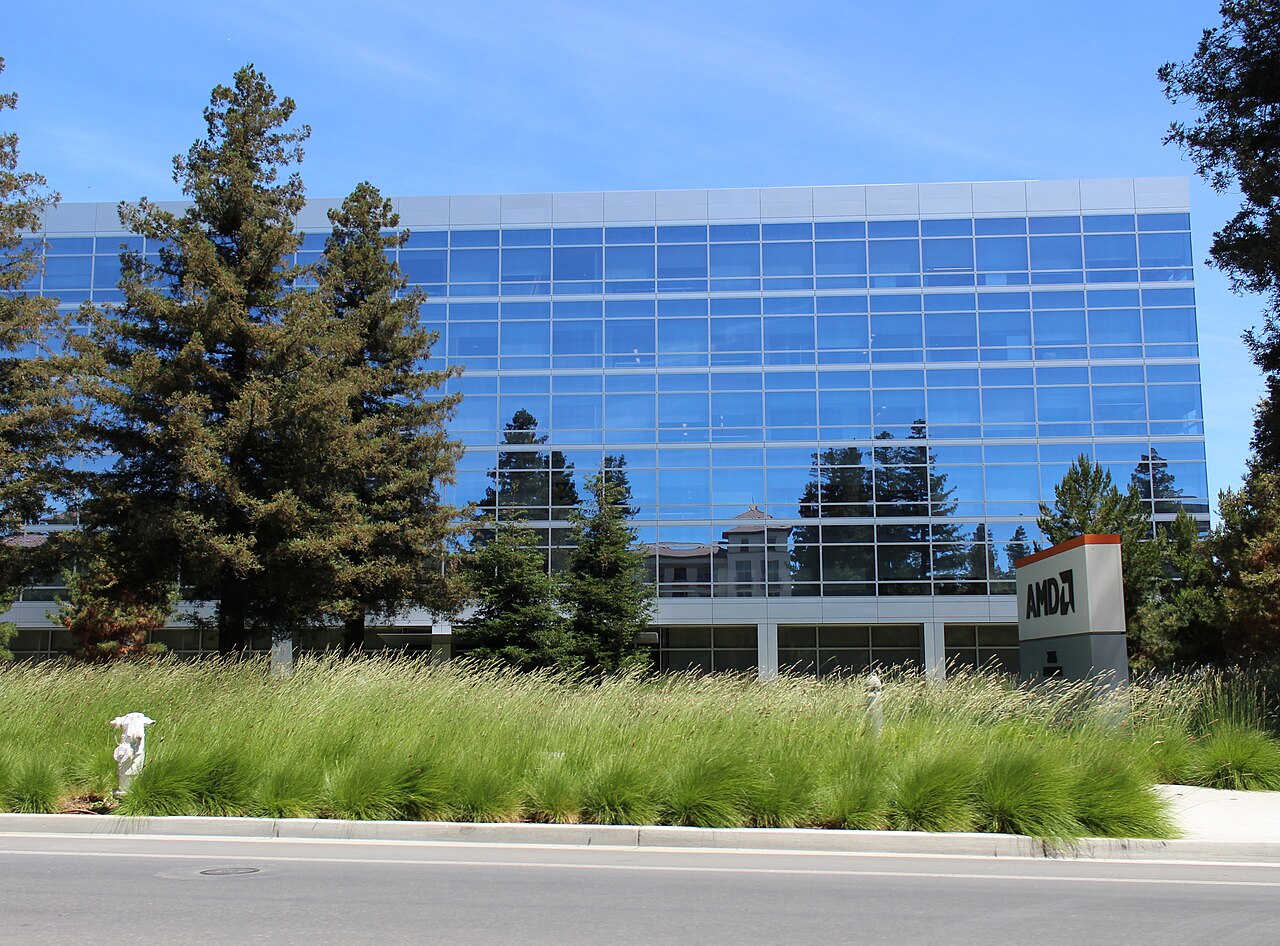
Readers went looking for the alternatives too. Page views for AMD rose 824% on its usual week, for the server maker Supermicro 763%, for the chip designer Arm 356% and for TSMC, the contract chipmaker, 193%. Broadcom's rose 85%.
Page views measure curiosity, not money: they say nothing about who bought or sold what. But they show how quickly the question changed from what happened to Huang to who else makes these chips. Whether anyone else can take much of Nvidia's business soon is less clear. AMD's chief executive, Lisa Su, had already said on its third-quarter call that “demand is higher than supply,” a Yahoo Finance column noted. A company that can't make enough chips for the customers it has can't quickly absorb a rival's.
The rush did not last the week. On Friday, Broadcom fell 4.8% and AMD lost 8.8%, the AP reported, while Nvidia fell 2%.
What insiders did
Corporate officers, directors and large shareholders reported open-market sales of $3.3 billion of their own companies' shares during the week and purchases of $276.7 million, in the 5,215 Form 4 filings we read.
The largest sales had little to do with AI. SLTA V (GP), L.L.C., one of the largest shareholders of the background-screening company First Advantage, sold $324 million. Arne Alexander Wilhelmsen, a director of Royal Caribbean, sold $221.9 million, and Ronda Stryker, a director of Stryker, $178.9 million. The biggest sale in an AI supplier came from Andy Bechtolsheim, one of the largest shareholders of the network-equipment maker Arista Networks: $86.9 million, under a trading plan set up in advance.
Source: SEC Form 4 filings
Insiders sell for many reasons, from taxes to diversifying their savings, and plans like Bechtolsheim's are set months ahead. None of these sales says anything on its own about Nvidia's week.
What companies told the SEC
It was a busy week for filings: 1,561 10-Q filings, as smaller companies reported their quarters, and 1,635 8-K filings, the form for major news. We count how many of those 8-Ks mention a set of themes. Artificial intelligence came up about as often as in a usual week, in 168 filings. The themes that jumped were less glamorous. Mentions of layoffs were up 134% on a usual week, in 23 filings, a rate as high as the week before and well above the weeks before that; tariffs were up 67%, in 291 filings; and share buybacks were up 85%, in 178 filings.
Source: EDGAR full-text search
A count of words is a rough measure. One filing can mention layoffs because a single plant is closing, and a week of quarterly reports always brings more of everything. But the mix says something: while the headlines were about one chip company's boss, the filings of hundreds of ordinary companies were about costs, trade and returning cash to shareholders.
Our read
This is analysis, not advice. The week's lesson is that the market now treats AI spending as bigger than any one company. When Nvidia lost its founder, the businesses selling into the same data-center build-out mostly held up, and some rose, though CoreWeave's jump came on Wednesday, after its own results and before the resignation.
Two things could change that. The first is Nvidia's own quarter. In the release announcing the change, the board said: “we expect the company’s operations, customer commitments and product roadmap to continue without interruption.” Tuesday's results, and what Colette Kress, the finance chief now serving as interim chief executive, says about orders, are the first test of that sentence. If big customers start talking openly about spreading their orders across suppliers, the industry's shape changes faster than any chip launch would change it.
The second is money. The inflation reading that lifted yields “raised expectations for coming hikes to interest rates by the Federal Reserve,” the AP reported, and it noted that “concerns are high about how CoreWeave and other companies will handle higher interest rates in the bond market, which make borrowing money more expensive.” AI data centers are built with a lot of borrowed money. A boom can survive losing its most famous face more easily than it can survive expensive money.
For one week, the AI industry carried on without Jensen Huang. On Tuesday, Nvidia has to show that it can too.